Speaker: S. Ramesh
Role: Global Head of Payments, Risk, and Data Solutions; formerly TD Securities
From AI Adoption to Business Transformation
During his presentation, S. Ramesh explored how businesses can move beyond experimenting with AI and focus on achieving measurable business value.
He began with an analogy from the retail industry, comparing Sears, Kmart, and Walmart during the rise of the internet. While Sears and Kmart moved their marketing and catalogues online, Walmart rewired its operating model around its supply chain.
As Ramesh explained:
“Sometimes the very first thing that you see is not the thing that’s going to give you the best benefit.”
The lesson was to look beyond adding technology to existing processes and consider how it can improve the way a business creates value.
Three Stages of AI Adoption
Ramesh described three phases of AI adoption:
- Tooling: Using AI to speed up or improve existing tasks without changing the underlying process.
- Automation: Replacing selected manual steps with AI agents to improve efficiency.
- Re-imagining the operating model: Rethinking people, processes, and technology to create better value.
He emphasized that the most significant opportunity lies in reimagining how businesses operate, rather than simply introducing new tools.
Managing Risk and Measuring Results
Ramesh highlighted that AI can produce inaccurate information because it is probabilistic by design. Businesses therefore need appropriate controls and risk management rather than relying entirely on technological solutions.
When selecting AI use cases, he stressed the importance of defining and measuring business benefits while ensuring compliance requirements are addressed.
He also discussed how faster software development alone does not guarantee faster delivery. Operational bottlenecks, meetings, and approval processes can still slow down implementation.
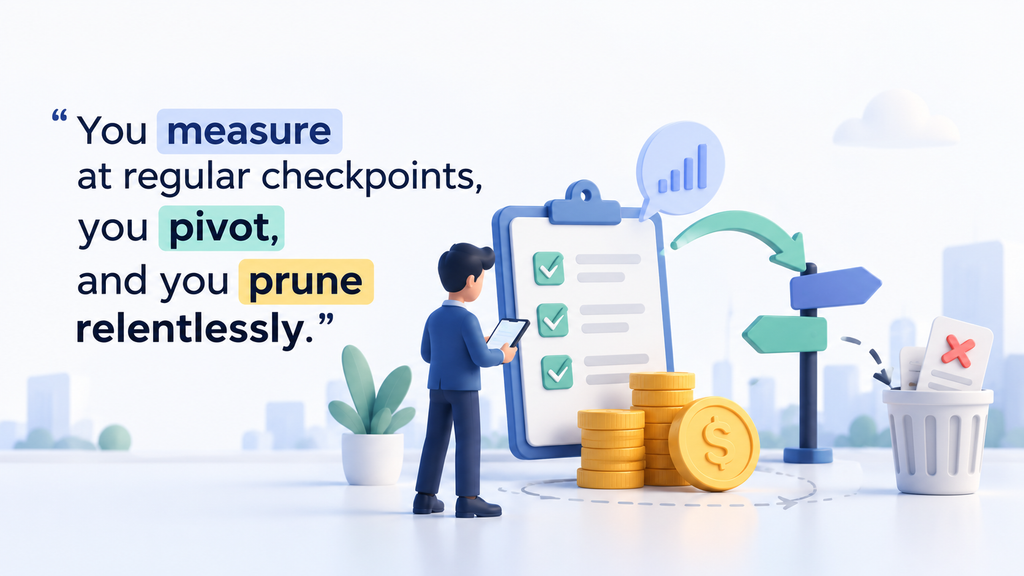
To measure progress, Ramesh recommended using actionable metrics, regular checkpoints, and a willingness to pivot when results fall short.
As he concluded:
“You measure at regular checkpoints, you pivot, and you prune relentlessly.”
The central message was clear: successful AI adoption requires measurable outcomes, continuous learning, and a focus on solving real business problems.
Q&A — unfiltered expert insights
Question 1: Where does AI have the strongest near-term business case in payments and cross-border?
Moderator — Dr. Angela Murphy:
“We do have one question for the Q&A, and it says, in payments and cross-border, where do you think AI has the strongest near-term business case? Is it fraud and risk? compliance, operations, customer experience, pricing, or something else?”
S. Ramesh:
“Ah, yes. So I think the short answer is that there’s a lot of use cases around it. There’s no shortage of use cases around it. Certainly in risk and compliance, there are use cases. It’s a little touchier here because you do have to have explainability, but there’s also a lot of advantages, things like day zero attacks.”
He also highlighted operational issues, production problems, and customer support as areas with potential benefits. He emphasised that businesses should define and measure the business benefit and ensure compliance approval before proceeding.
Question 2: How do you prevent AI initiatives from becoming innovation theatre?
Moderator — Dr. Angela Murphy:
“Okay. And then the final question in Q&A for today before we move on to our next speaker is, how do you prevent AI initiatives from becoming innovation theater where there’s lots of pilots and impressive demos, but very few things that materially change the P&L?”
S. Ramesh:
“Exactly. And I think that is key. I think the way that I do it is I have a scorecard, a business scorecard, which we use to measure the value of the use cases. We measure them across multiple parameters such as risk, revenue growth. cost reduction and so on, alignment with strategy, and then have actionable metrics that are defined before you start the use case.”
He further explained that teams should define what they will measure, track progress continuously, and pivot or stop initiatives that fail to deliver value.
Source: Next-Gen Payments & Cross-Border Innovation — AI, Stablecoins & The Future of Payments.
The Conversation Doesn’t End Here.
Want to explore the insights in more detail? Discover the key takeaways in our post-event report on LinkedIn.
- Read the Post-Event Report: https://lnkd.in/p/dfAFrVUw
Continue exploring how AI, stablecoins, and emerging payment innovations are shaping the future of global payments.